
How can data center cooling be improved to reduce energy consumption?
Data center cooling can be improved (and energy consumption reduced) by using on-site carbonate fuel cell combined heat and power (CHP) to drive absorption chilling—converting fuel cell waste heat into chilled water so that less electricity is spent on cooling. FuelCell Energy Block systems produce a single high-flow exhaust stream at 725oF that can generate hot water, steam, or chilled water via an absorption chiller, turning thermal output into a data-center-scale cooling asset and freeing more electrical capacity for IT load. By capturing and using this heat, overall system efficiency can exceed 80%, delivering significant energy savings and lower emissions compared with conventional electric cooling.
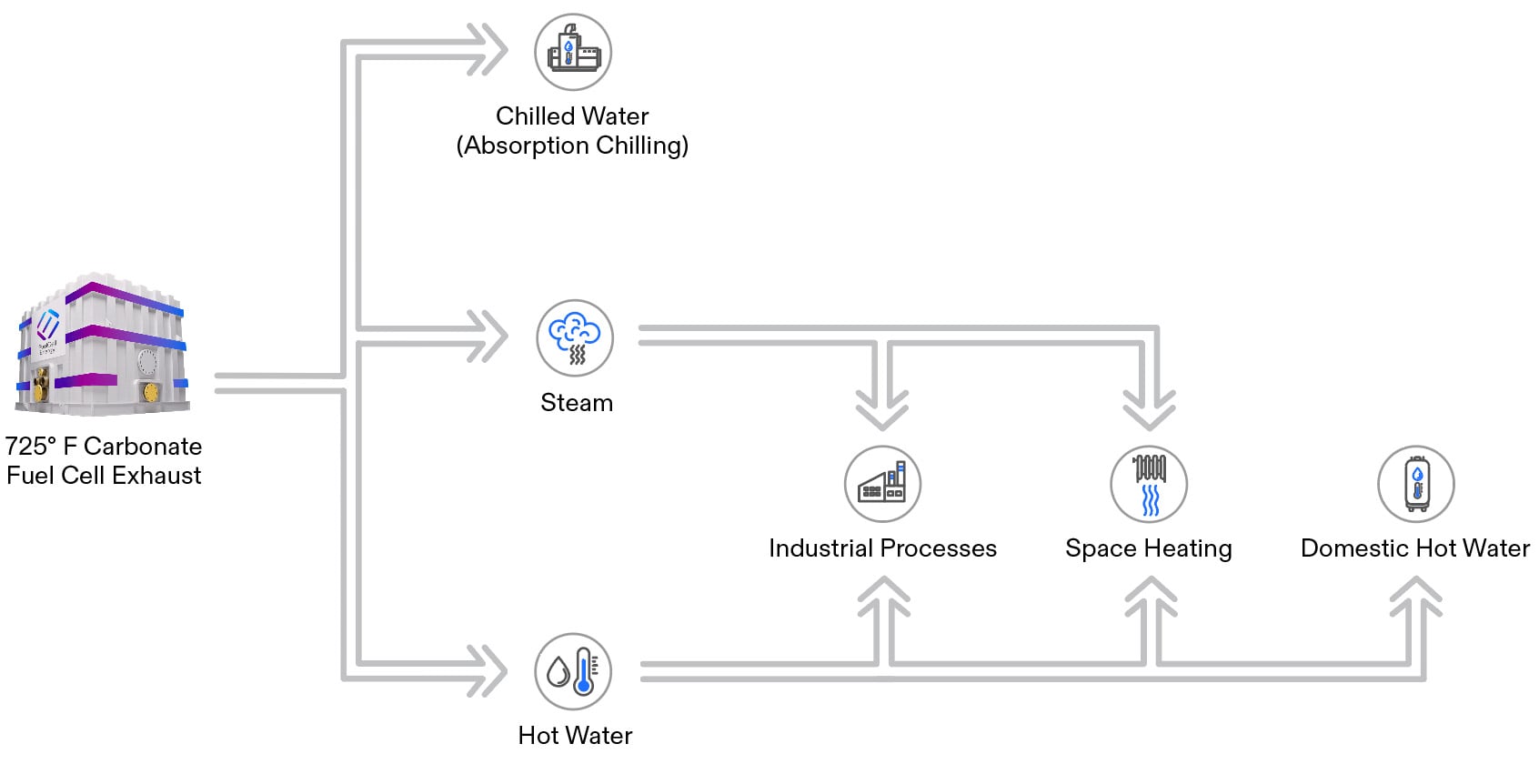
Carbonate fuel cells are an ideal technology for data center cooling optimization
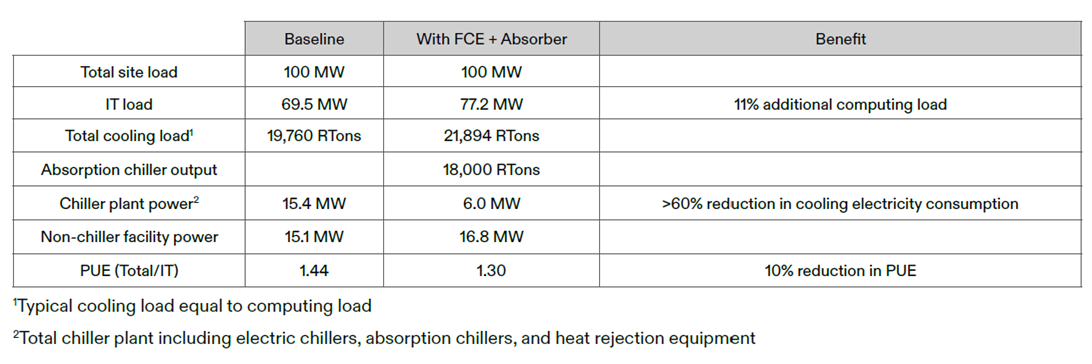
Carbonate fuel cells support a high-efficiency data center cooling approach: fuel cell CHP plus absorption chilling. The fuel cell’s high-temperature exhaust can produce hot water or steam to run absorption chillers for chilled water, raising total system efficiency from ~50% to up to 80% and providing up to 450 tons of cooling per 2.5 MW of electric output. The table below compares electricity usage of a data center with conventional electric cooling to one that uses fuel cell-powered absorption chilling. Given a fixed electric capacity of 100 MW, absorption chiller use reduces PUE from 1.44 to 1.30, and frees up 7.7 MW for additional computing load, which can increase revenue for owners and operators of data centers.
Megawatt scale power modules match the scale and cost needed for data centers
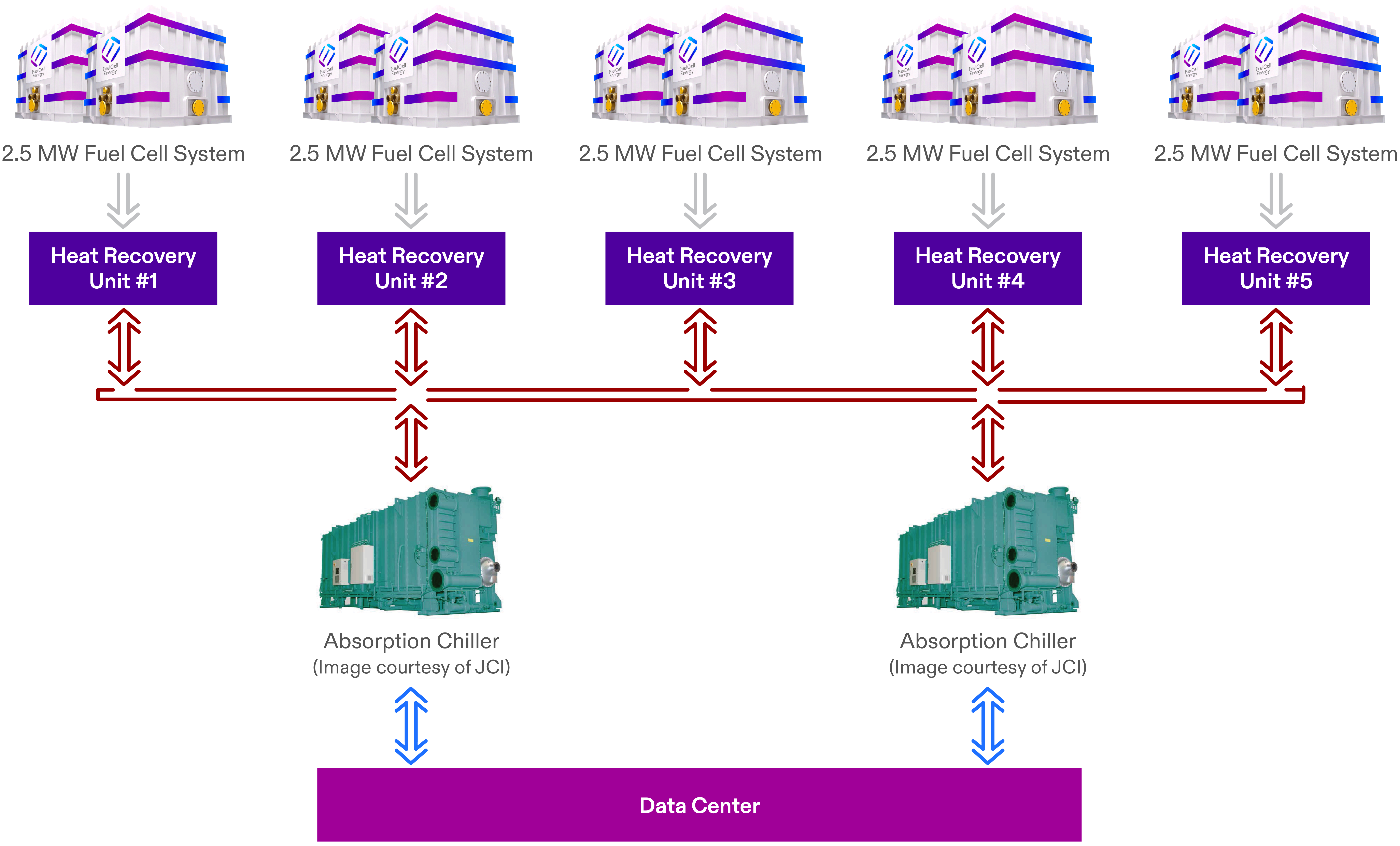
Megawatt scale carbonate fuel cells simplify heat recovery integration for data center cooling. Unlike sub‑MW fuel cell systems that may create many small exhaust streams and complex piping, FuelCell Energy’s 2.5 MW system consolidates exhaust into a single outlet, reducing installation cost and failure points. At large sites, multiple modules can feed a common steam loop to drive multiple absorption chillers and deliver meaningful chilled water capacity.
Resilient absorption chilling through modular design and built-in system redundancy
The modular design of FuelCell Energy Block Systems adds resilience to data center cooling by powering absorption chillers on-site, including during grid outages. Chillers can run in parallel, and if a chiller or fuel cell module is offline, recovered heat can be routed to remaining chillers to maintain chilled water production and continuous cooling.
Proven large scale combined heat and power experience
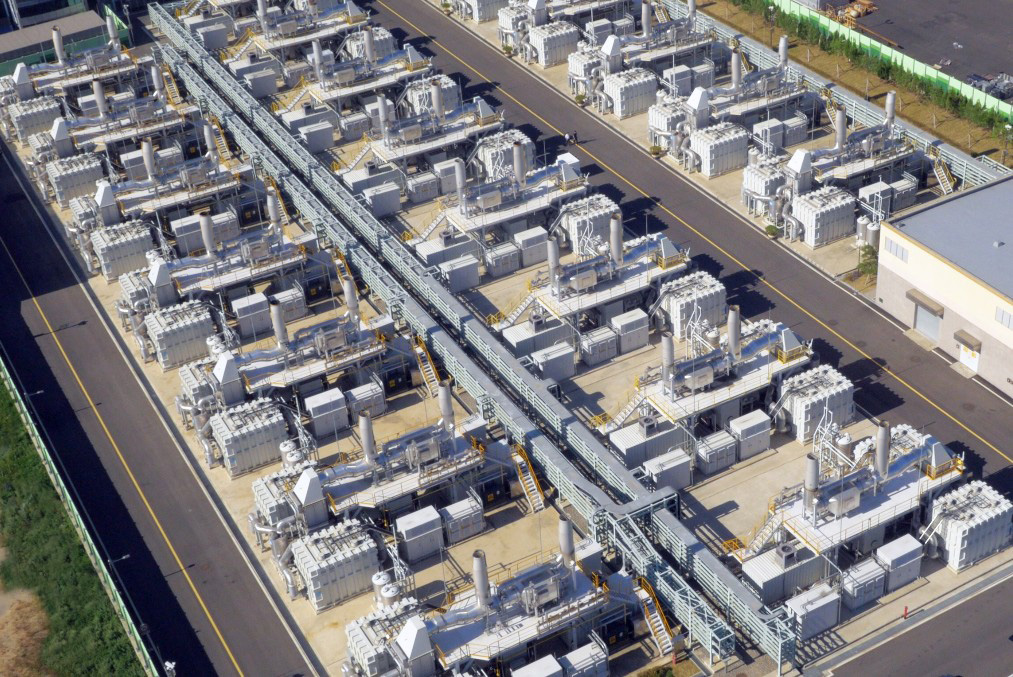
FuelCell Energy has delivered multiple large scale fuel cell district heating systems in Korea, including a 58.8 MW fuel cell installation at the Hwaseong Balan Industrial Complex. The fuel cell installation (pictured below) can power 135,000 homes and provide heat to 20,000 homes. Applying this site's thermal output to data center needs, the heat recovery system can generate more than 10,000 tons of chilled water using absorption chillers, which is enough to cool a 30 MW data center computing load.
Contact us today to learn more about FuelCell Energy’s technology solutions.
.png?width=1037&height=559&name=fce-data-center-whitepaper-graphic%20(1).png)