
FuelCell Energy Block Systems are designed to deliver reliable, low-emission power without disrupting the communities they support. By providing behind-the-meter power that avoids combustion, operates quietly, minimizes land use, and can be configured for low-water or no-water operation, carbonate fuel cells can help data centers align with local and environmental priorities.
Cleaner local air quality starts with non-combustion fuel cell technology
Each FuelCell Energy Block can deliver megawatt-scale power using an electrochemical process that’s designed to support healthy local air quality. Fuels like pipeline natural gas, biogas, and hydrogen blends can be reacted inside the fuel cell stacks to provide continuous electricity. Since fuel isn’t burned during the electrochemical process, electricity is generated with minimal (or negligible) levels of criteria air pollutants.
Compared to traditional power generation technologies, fuel cells emit sharply lower levels of nitrogen oxides (NOx), sulfur oxides (SOx), particulate matter (PM), and volatile organic compounds (VOCs). By helping reduce these emissions, fuel cells support cleaner local air and a healthier environment for surrounding communities.
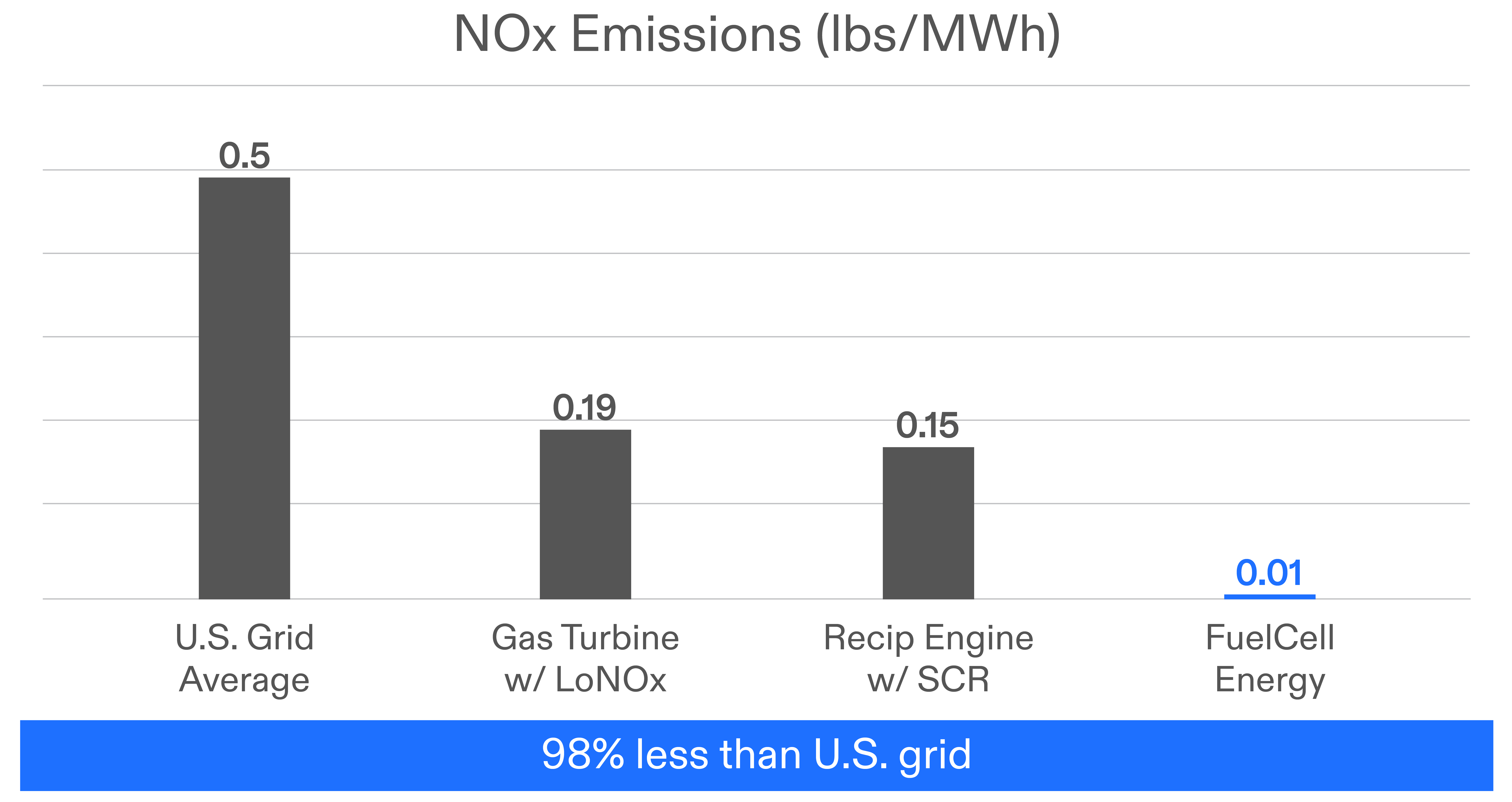
Because of the carbonate fuel cell’s low-emissions profile, installations are often easier to permit, even in regions with strict air quality requirements. The result is a faster time-to-power solution that aligns with community health and helps de-risk data center projects.
Carbonate fuel cells are designed for quiet operation
FuelCell Energy systems are engineered to operate quietly—often comparable to or quieter than typical HVAC equipment. Because the fuel cell modules themselves have no moving parts, they avoid the primary sources of industrial noise—combustion, vibration, and mechanical friction.
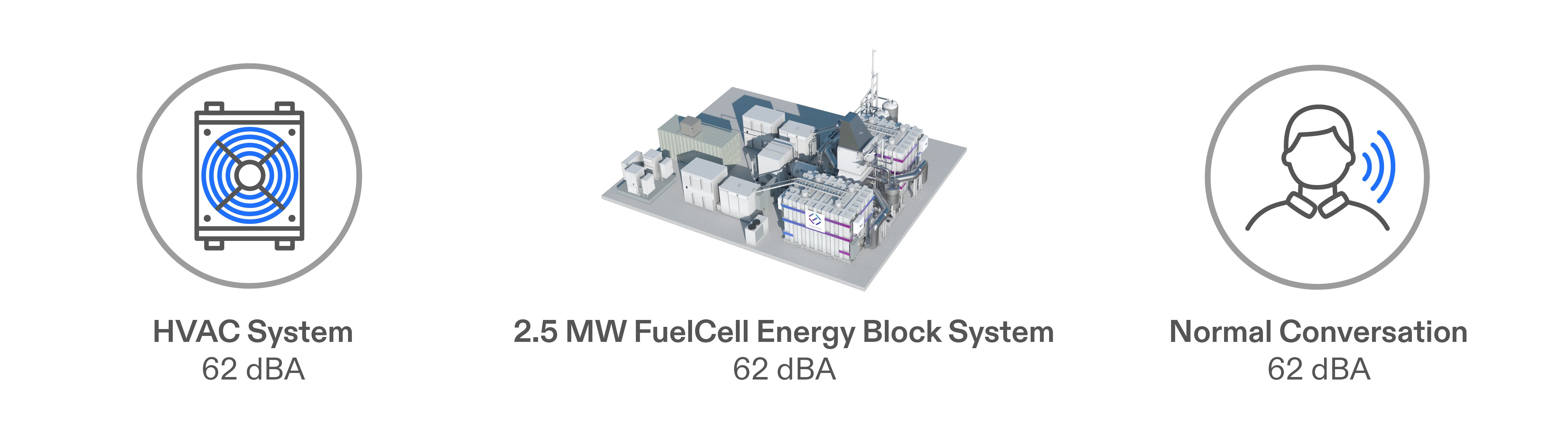
This low acoustic profile ensures that installations do not disrupt nearby residents or businesses. Combined with a compact footprint, the systems can be seamlessly integrated into industrial settings, allowing them to operate in the background without drawing attention.
Compact, low-profile design that looks like it belongs
The modular, compact layout of FuelCell Energy installations allows them to be placed in rows behind or alongside industrial buildings, preserving community aesthetics and minimizing visual impact. The system’s design supports safe pedestrian activity nearby without requiring massive setbacks that would interrupt established walking paths or campus circulation.
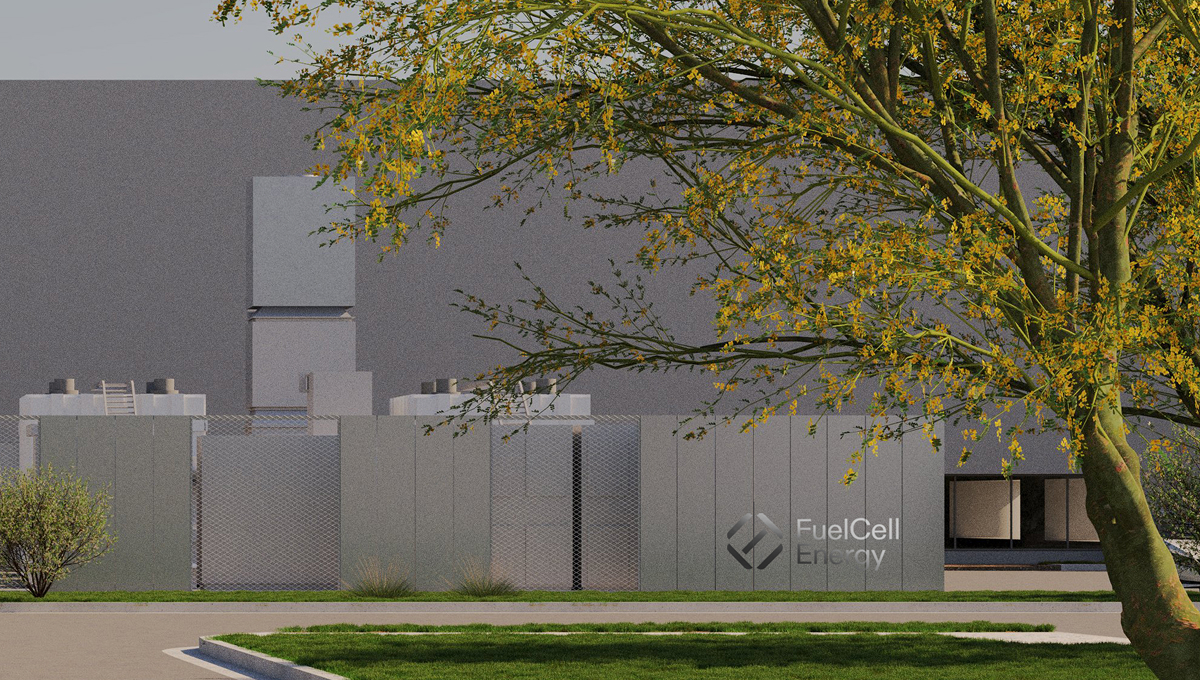 Concept rendering of FuelCell Energy Block systems behind fencing at an industrial facility.
FuelCell Energy’s 1.4 MW Trinity College fuel cell system (pictured below) delivers safe, reliable, low‑emission power and thermal energy directly on campus in Hartford, Connecticut. The compact and quiet system blends into the urban campus setting behind fencing and often goes unnoticed by those who live and work in the surrounding community.
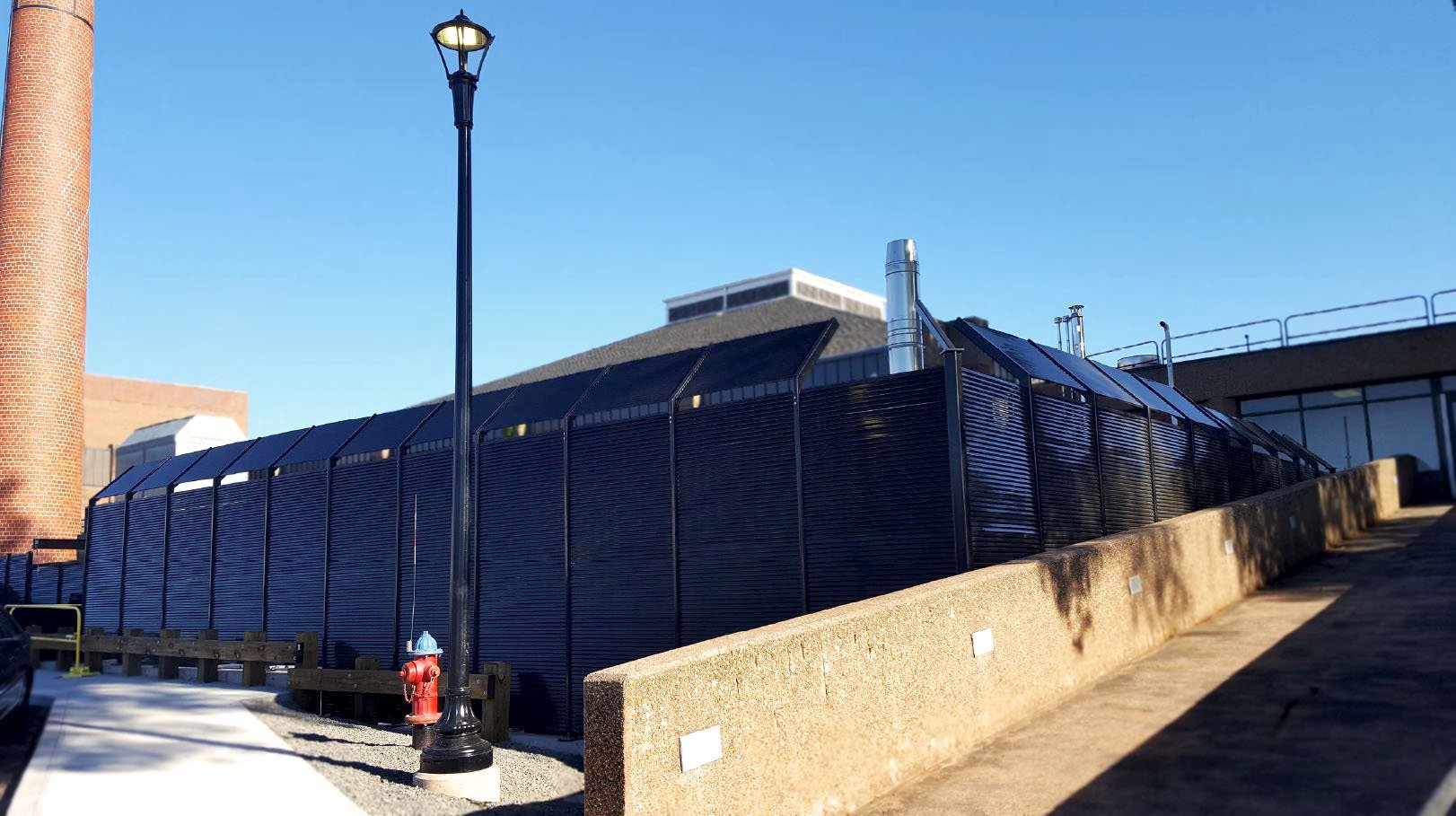 FuelCell Energy system behind fencing at Trinity College in Connecticut.
Fuel cells can offer more power from less space
Land is a valuable community resource. The space-efficient power density of fuel cells can maximize the amount of electricity produced from a relatively small footprint, enabling reliable power generation without requiring large-scale land development. By fitting within existing developed sites and delivering power close to where it is needed, fuel cells help communities preserve open space while supporting economic growth and increasing energy demand.
Efficient water use and water neutral capabilities
Water use is an increasingly important consideration for data centers and their surrounding communities. FuelCell Energy systems already consume less water than conventional grid power and combined cycle gas turbine (CCGT) power plants. Because fuel cells generate power electrochemically rather than through a steam cycle, they eliminate the cooling water demand that drives most of the grid’s water consumption.
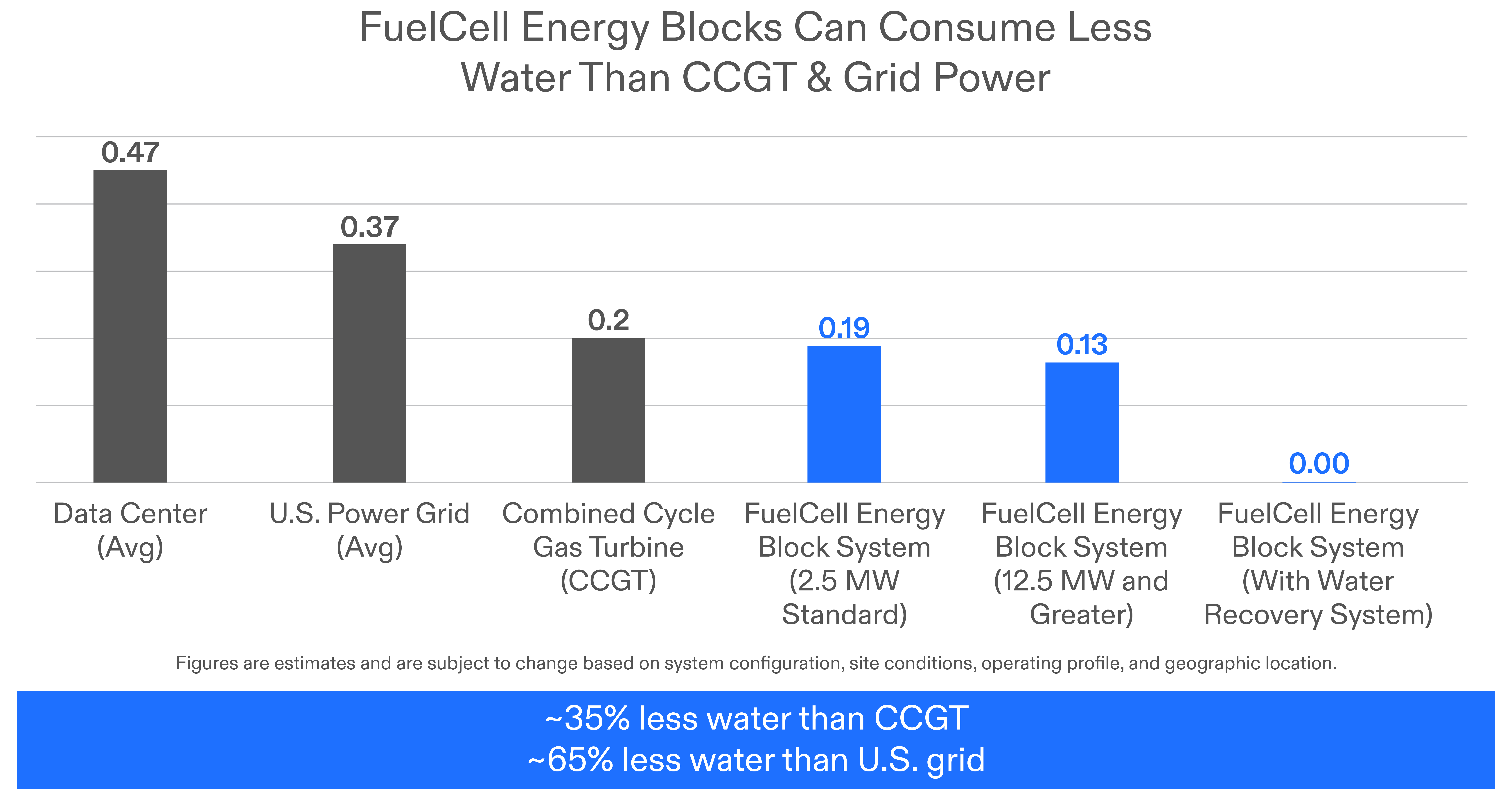
For sites with stricter requirements, FuelCell Energy has a proven history of configuring systems to be water neutral. At Toyota North America’s Port of Long Beach vehicle processing center, a FuelCell Energy system produces electricity, hydrogen, and water for vehicle washing—highlighting how advanced system design can create additional value streams while addressing resource constraints.
Fuel cells can help data centers avoid grid strain or ratepayer impacts
FuelCell Energy enables on-site power generation, allowing data centers to operate independently of constrained utility interconnections. Because the fuel cell power is produced where it is used, there is no additional burden placed on the local grid or ratepayers. This approach can help avoid grid congestion and transmission infrastructure buildouts while supporting broader grid reliability for the surrounding community.
Contact FuelCell Energy today to discuss community-friendly power for your data center.